The Echoes of the Mahakam: Saving Kalimantan’s Smiling Spirit
News
Others
 Willie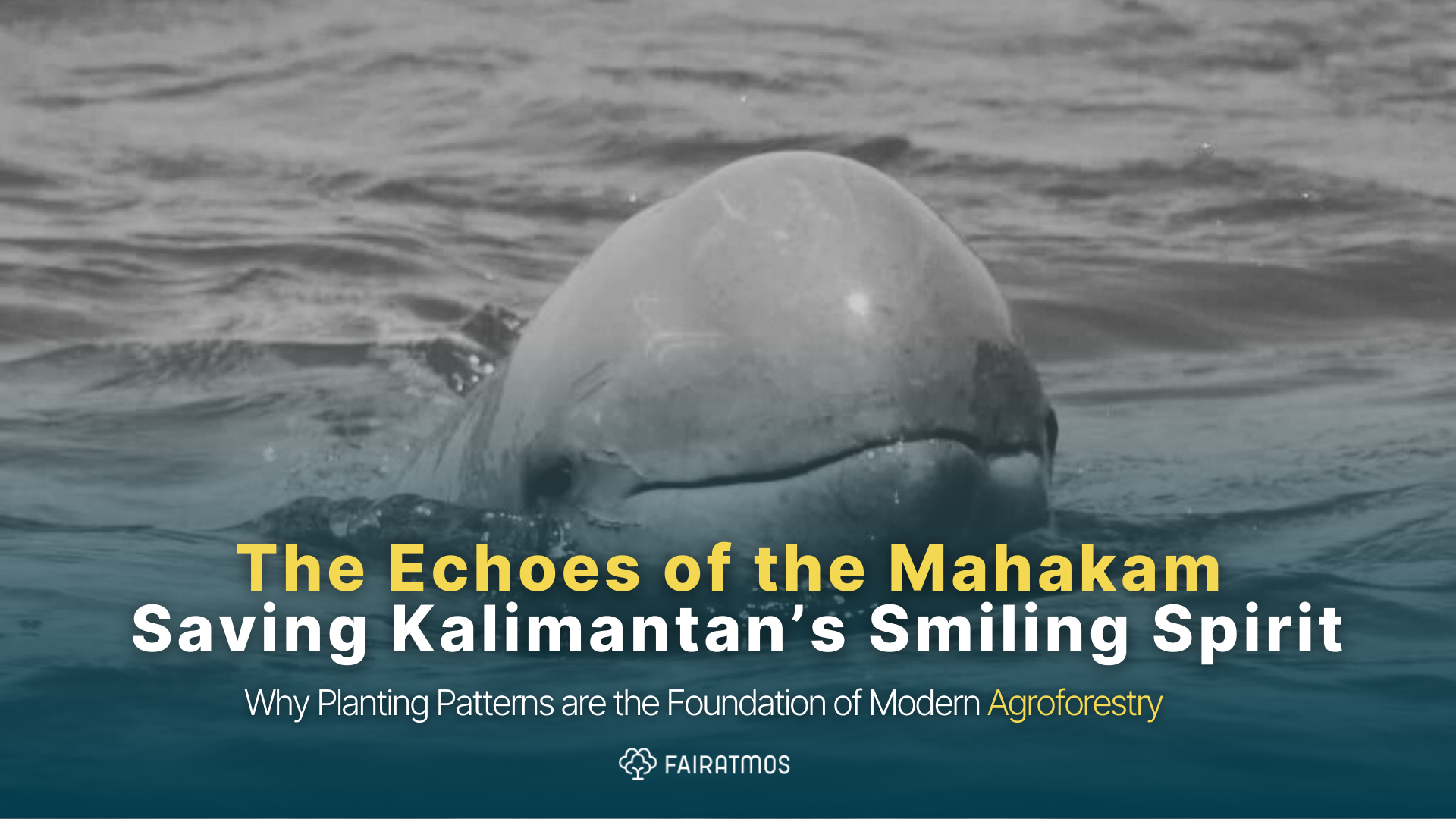
In the humid, sun-drenched reaches of East Kalimantan, the Mahakam River does more than sustain life, it guards a secret.
If you sit on the wooden docks of a riverside village at dusk, a local elder might tell you the story of two children who, long ago, were transformed into dolphins to escape a world that had grown too harsh for them. They became the Pesut Mahakam, the “smiling” spirits of the river, destined to live forever in the water’s embrace.
For centuries, this legend was enough to protect them. To the people of the Mahakam, these dolphins are not simply wildlife; they are part of the river’s identity.
But as the river changes, the legend risks fading into silence.
A Masterpiece of Adaptation
To see an Irrawaddy dolphin (Orcaella brevirostris) for the first time is to witness a quiet marvel of evolution.
Unlike their sleek oceanic cousins, the Pesut Mahakam has evolved specifically for the winding, murky channels of a tropical river. Their rounded forehead, flexible neck, and lack of a long beak allow them to maneuver through shallow waters and flooded forests. Even their famous “smile”—a natural curve of the mouth, gives them a gentle, almost curious expression.
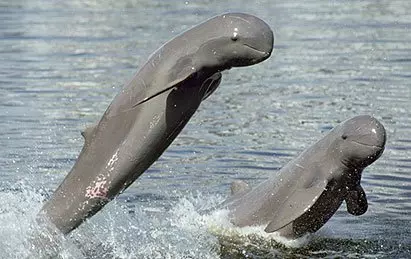
They are intelligent and highly social animals. Groups often move together in coordinated patterns, communicating through clicks and whistles that bounce through the water like sonar signals.
To researchers who have spent years with them, their individuality becomes unmistakable.
Conservation researcher Danielle Kreb, who has studied the Mahakam population for more than two decades, recalls one dolphin in particular that left a lasting impression.
“Over 25 years studying the pesut, there are several individuals we can recognize from their dorsal fins,” she explains. “But one dolphin I will never forget is a female named Fiona.”
In the social hierarchy of the Mahakam dolphins, females often lead the group, known locally as the "pilot.” Fiona became famous after a complicated rescue operation involving multiple organizations and community members who worked together to return her safely to the river.
For Kreb and her team, Fiona represents something larger than a single animal. She represents the fragile bond between people and the river.
The Silent Crisis
Today, fewer than 80 Irrawaddy dolphins are believed to remain in the Mahakam River.
Their survival depends on sound. Dolphins use echolocation to “see” underwater, navigating and hunting by interpreting returning echoes from their clicks. But the Mahakam has become increasingly loud.
Coal barges now move constantly along the river, turning parts of the waterway into what researchers describe as an industrial corridor.
To humans, the engines are simply noise.
To dolphins, they are disorientation.
Kreb explains that acoustic pollution can change dolphin behavior in surprising ways.
“Some dolphins actually chase the barges and spray water at them,” she says. “But the noise can also disrupt their normal patterns. Some individuals disappear for periods of time, and others can become disoriented.”
The constant underwater noise interferes with their ability to communicate, hunt, and navigate. For a species already living in a confined river system, the effects can be profound.
But the most immediate danger lies just beneath the surface.
Gillnets, known locally as rengge, are widely used by local fishermen. Nearly invisible underwater, these nets can trap dolphins accidentally when they surface to breathe.
It is not a conflict born from malice.
Both fishermen and dolphins are simply trying to survive in the same river.
Innovation in the Crossfire
Conservation efforts on the Mahakam are increasingly focused on solutions that support both wildlife and local livelihoods. One promising technology involves acoustic pingers, small devices attached to fishing nets that emit sounds detectable by dolphins.
These signals act as warnings, helping dolphins avoid entanglement without affecting the fish catch.
According to field observations supported by the RASI Foundation, pingers can significantly reduce accidental dolphin deaths. In some cases, fishermen even report increased catches because fish behavior around the nets changes.
Yet technology alone is not enough.
Kreb emphasizes that widespread adoption requires community support and government involvement.
“In general, these technologies do not negatively affect the dolphins,” she explains. “But their use needs stronger outreach and policy support so more fishermen can adopt them.”
Encouragingly, that support is growing.
Unexpected Allies
When people imagine conservation, they often picture scientists or environmental groups leading the charge.
But in the Mahakam, the most powerful allies are increasingly local communities.
“Many more people care about the Pesut Mahakam now,” Kreb says. “Local fishermen, youth groups, and school children are becoming involved.”
Government agencies, including the regional conservation authority and the Kutai Kartanegara Regency, have also played an important role in supporting protection efforts.
At the same time, interest in ecotourism is beginning to grow. Responsible dolphin watching could provide new income opportunities for communities—if managed carefully with clear regulations and oversight.
For many young people in Kalimantan, protecting the pesut has become a symbol of pride in their natural heritage.
The Fairatmos Perspective: Protecting the River from Source to Sea
The survival of the Pesut Mahakam is not just about protecting a species.
It is about protecting an entire ecosystem.
Dolphins depend heavily on the health of the river environment—from water quality to fish populations and seasonal flows.
“Carbon projects that protect riparian ecosystems are very important for biodiversity in rivers,” Kreb notes. “Protecting forests, mangroves, and peatlands upstream can significantly improve river health, the habitat that dolphins depend on.”
This means the health of riparian forests, peatlands, and mangrove ecosystems directly affects the dolphins’ survival.
At Fairatmos, this connection is central to how we think about climate solutions.
Nature-based carbon projects that protect forests, peatlands, and mangroves do more than capture carbon. They stabilize riverbanks, filter pollutants, regulate water flow, and maintain the ecological balance that river species depend on.
Protecting the Mahakam dolphins also means protecting the landscapes that feed the river itself.
The Last Look
Despite the challenges, there are moments of hope.
For researchers who spend long days scanning the river’s surface, few sights are more meaningful than the appearance of a new calf.
“Seeing a newborn dolphin is one of the most beautiful moments in my life,” Kreb says.
For conservationists, births are more than emotional milestones, they are vital indicators of population survival. To ensure the species’ future, the number of calves born must exceed the number of dolphins lost each year.
Each new calf is a reminder that the story of the Pesut Mahakam is not finished.
Yet.
If the legend of the “smiling spirits of the river” is to survive beyond folklore, the Mahakam river must remain a place where dolphins can still swim freely.
Where children growing up along its banks will not only hear the story of the pesut—but see them surface, alive and smiling, in the water.
Sources & Further Reading
IUCN Red List – Orcaella brevirostris (Mahakam subpopulation)
Yayasan Konservasi RASI – Dolphin conservation reports
Field insights from Danielle Kreb
National Geographic – The Irrawaddy Dolphin is Disappearing
For Buyers & Investors
Explore verified, high-impact projects like this through AtmosFund & invest in the future of sustainable landscapes.
Explore AtmosFundFor Landowners & Project Starters
Learn how your land could qualify for carbon project development through AtmosCheck.
Sign Up Now